As cryptocurrency continues to reshape global finance, security has become one of the most important considerations for users. Unlike traditional banking systems, cryptocurrencies place full responsibility for asset protection on individuals. There are no centralized recovery systems, password resets, or customer service departments that can restore lost funds. This is why hardware wallets—and specifically Trezor login—play a vital role in safe crypto management.
Trezor is one of the pioneers of hardware wallet technology, offering a secure and transparent way to store and access digital assets. This comprehensive guide explains what Trezor login is, how it works, how users access their wallets, common login issues, and best practices for long-term crypto security.
Trezor is a hardware wallet developed by SatoshiLabs, designed to store cryptocurrency private keys offline. Instead of keeping sensitive information on internet-connected devices, Trezor isolates private keys within a secure physical device.
Popular Trezor devices include:
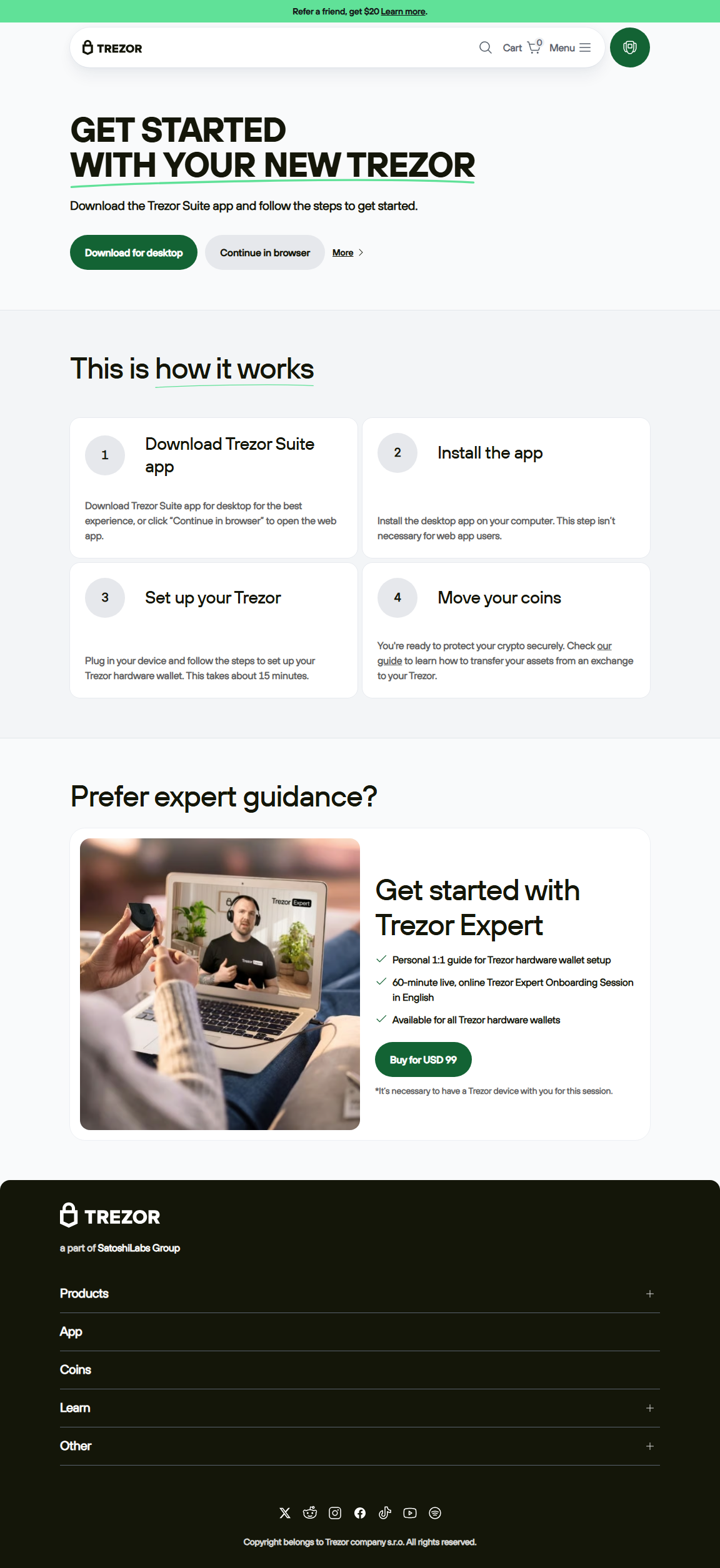
Trezor wallets are used alongside Trezor Suite, a desktop and web application that allows users to manage crypto assets while the hardware device handles all security-critical actions.
Trezor login is fundamentally different from logging into an exchange or online wallet. There is no username, email, or password associated with a Trezor wallet. Instead, login is based on device ownership and physical confirmation.
In simple terms, Trezor login means:
This approach ensures that your private keys never leave the device and are never exposed to the internet.
Traditional login systems rely on credentials that are often stored online. These systems are vulnerable to hacking, phishing, data leaks, and malware. Trezor removes these risks by eliminating online credentials entirely.
Key security advantages of Trezor login include:
Even if your computer is compromised, attackers cannot access your crypto without physical access to your Trezor device.
The Trezor login process is simple but built on strong cryptographic principles.
You connect your Trezor wallet to your computer or mobile device using a USB cable.
Trezor Suite recognizes the connected device and prompts you to continue.
Depending on your setup, you may need to:
All sensitive actions, including sending funds or connecting to applications, must be approved directly on the Trezor screen.
Without device confirmation, no transaction can be completed.
Trezor Suite does not have its own login credentials. It does not store passwords, emails, or private keys.
Important points:
Trezor Suite acts only as an interface. The hardware wallet itself is the login key.
Before using Trezor login, users must complete the initial setup process.
When you first use your Trezor, you are prompted to create a new wallet or recover an existing one.
The PIN protects your device from unauthorized physical access.
Trezor generates a 12- or 24-word recovery seed, which is the only backup of your wallet.
Users must confirm the recovery seed on the device to ensure it is recorded correctly.
After setup, login simply requires connecting the device and unlocking it.
Both methods rely on the hardware wallet for authentication.
Once logged in, Trezor supports a wide range of digital assets, including:
Support varies by model and firmware version.
This may be caused by outdated software or USB issues.
Solution:
Entering the wrong PIN repeatedly increases the delay between attempts.
Solution:
PINs cannot be recovered.
Solution:
Web-based access may be blocked by browser settings.
Solution:
The recovery seed is the most important element of Trezor security. It allows you to restore your wallet on any compatible device if your Trezor is lost, damaged, or reset.
Critical rules:
Anyone with the recovery seed has full access to your funds.
Many users confuse hardware wallet login with exchange accounts. The differences are significant.
FeatureTrezor LoginExchange LoginPrivate key ownershipUserExchangeLogin methodHardware verificationEmail & passwordHack riskVery lowHigherAsset custodySelf-custodyThird-party
Trezor login provides full ownership and control.
Trezor can be connected to third-party wallets like MetaMask to interact with decentralized applications.
How it works:
This keeps private keys offline while enabling Web3 access.
Trezor login does not require personal information such as name, email, or phone number. However, blockchain transactions are public by design. Trezor enhances security but does not provide anonymity.
These advantages make Trezor popular among both beginners and experienced users.
These limitations are trade-offs for increased security.
To maximize protection:
Trezor continues to evolve with improvements in usability, expanded asset support, and enhanced integration with decentralized ecosystems. As self-custody becomes more important, hardware-based login systems like Trezor are expected to remain a core part of crypto security.
Trezor login represents a secure and transparent approach to cryptocurrency access. By removing passwords, keeping private keys offline, and requiring physical confirmation for every action, Trezor significantly reduces the risks associated with digital asset management.
For users who value control, security, and long-term protection of their cryptocurrency, Trezor login offers one of the most reliable self-custody solutions available today.